
Monasteries in the sky, swings under a big old tree, and a night among the rocks
After eighteen days around Athens and the Peloponnese, we finally turned north. Meteora had been on the list since before we ever left home, and it did not disappoint.
16 February: a long drive north, and the first look
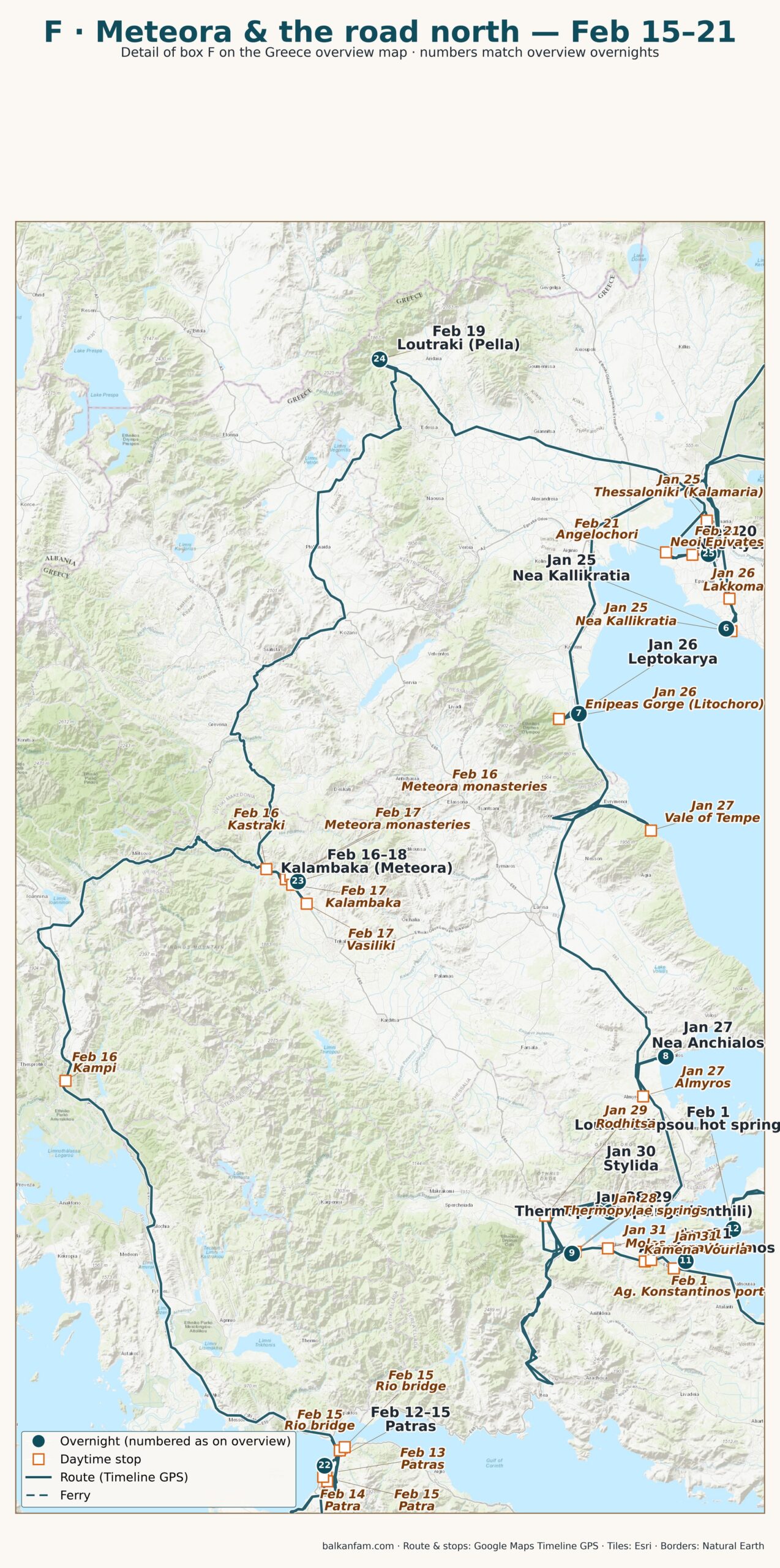
We left Patras mid-morning and drove a long day — up the Ionian motorway, a lunch-and-fuel stop near Arta, then east over the Pindus mountains on the Egnatia. About 300 km in all. The kids were champions. One of them spent the last stretch holding a fistful of orange leaves like a bouquet.
Around four we came round a bend near Kastraki and there they were. Huge grey pillars of rock sticking straight up out of the green, with the cloud sitting low on top of them. You’ve seen the photos. They still don’t prepare you.
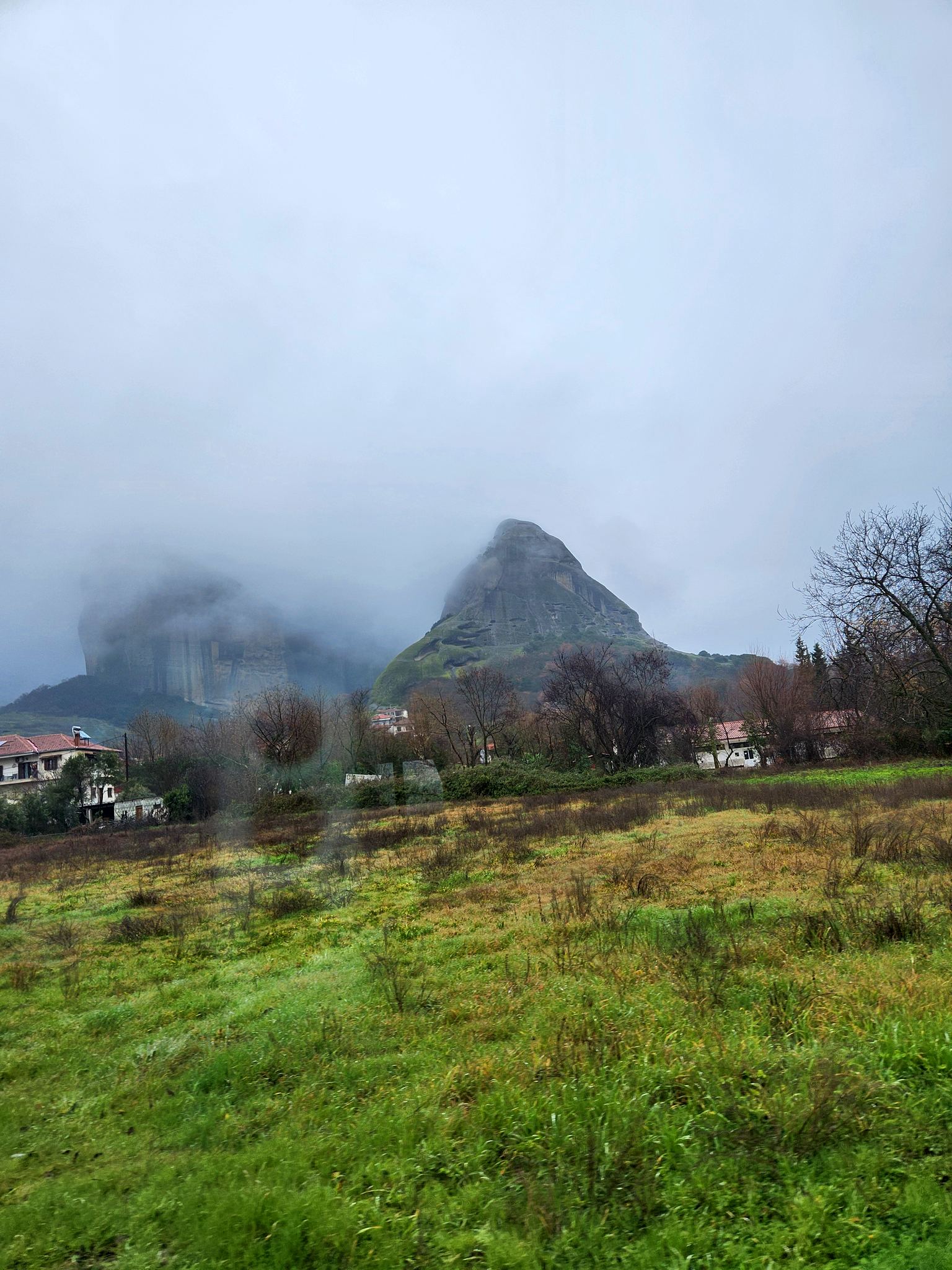
We parked on the edge of Kalambaka, the town at the foot of the rocks, at Guesthouse Arsenis, where the hosts welcomed the camper like family — we said in our Maps review we knew straight away we’d found something special. Sibling cuddles in the camper, and early to bed.
17 February: Varlaam, Roussanou, a giant barrel, and swings
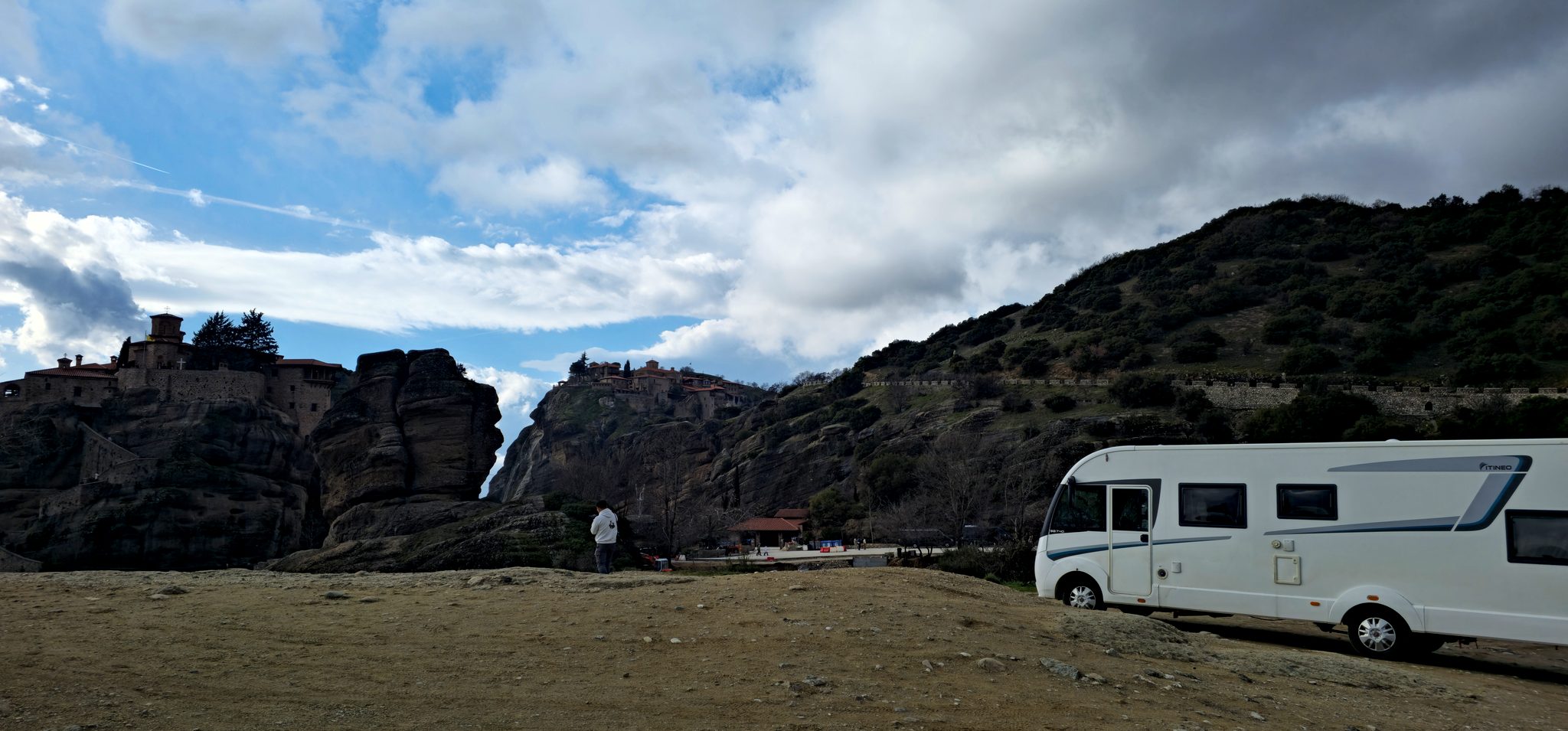
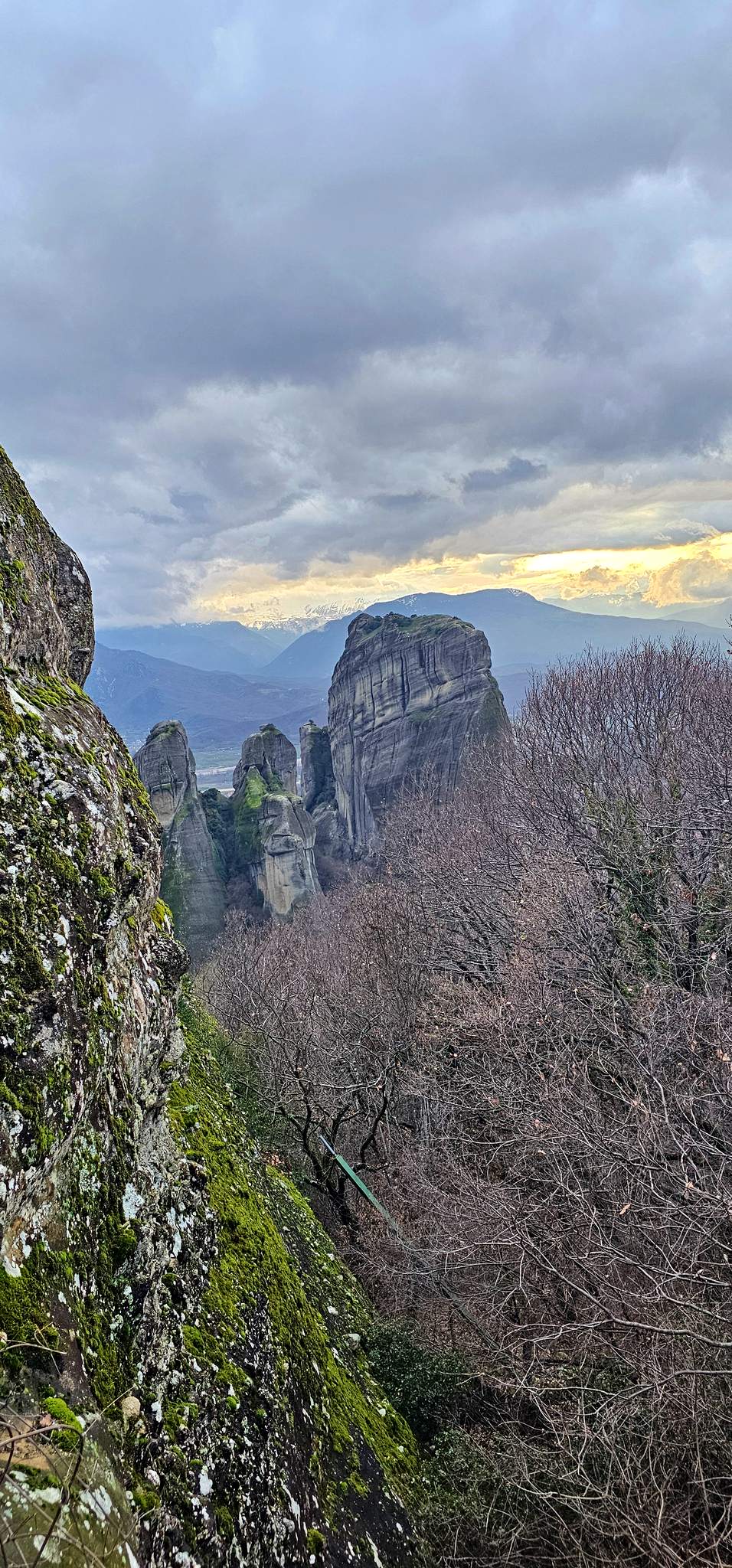
Blue sky. Finally. We drove up the winding road first thing, and by half past nine we were standing at a viewpoint looking across at monasteries sitting right on top of the rocks, like someone had just placed them there. From the road by Great Meteoron you get that first full look — a monastery crowning its pillar, and the sandstone towers dropping away into the valley.

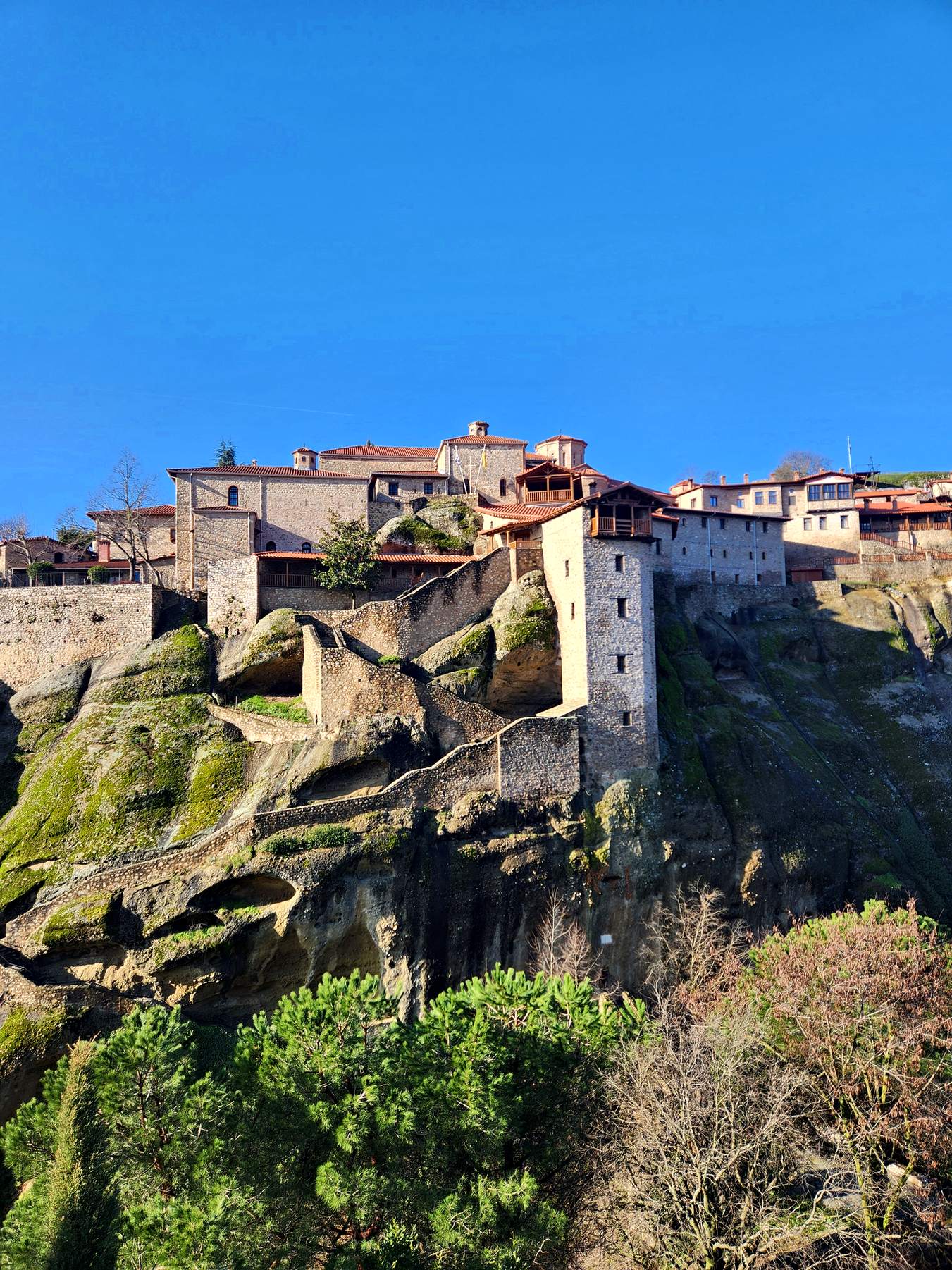
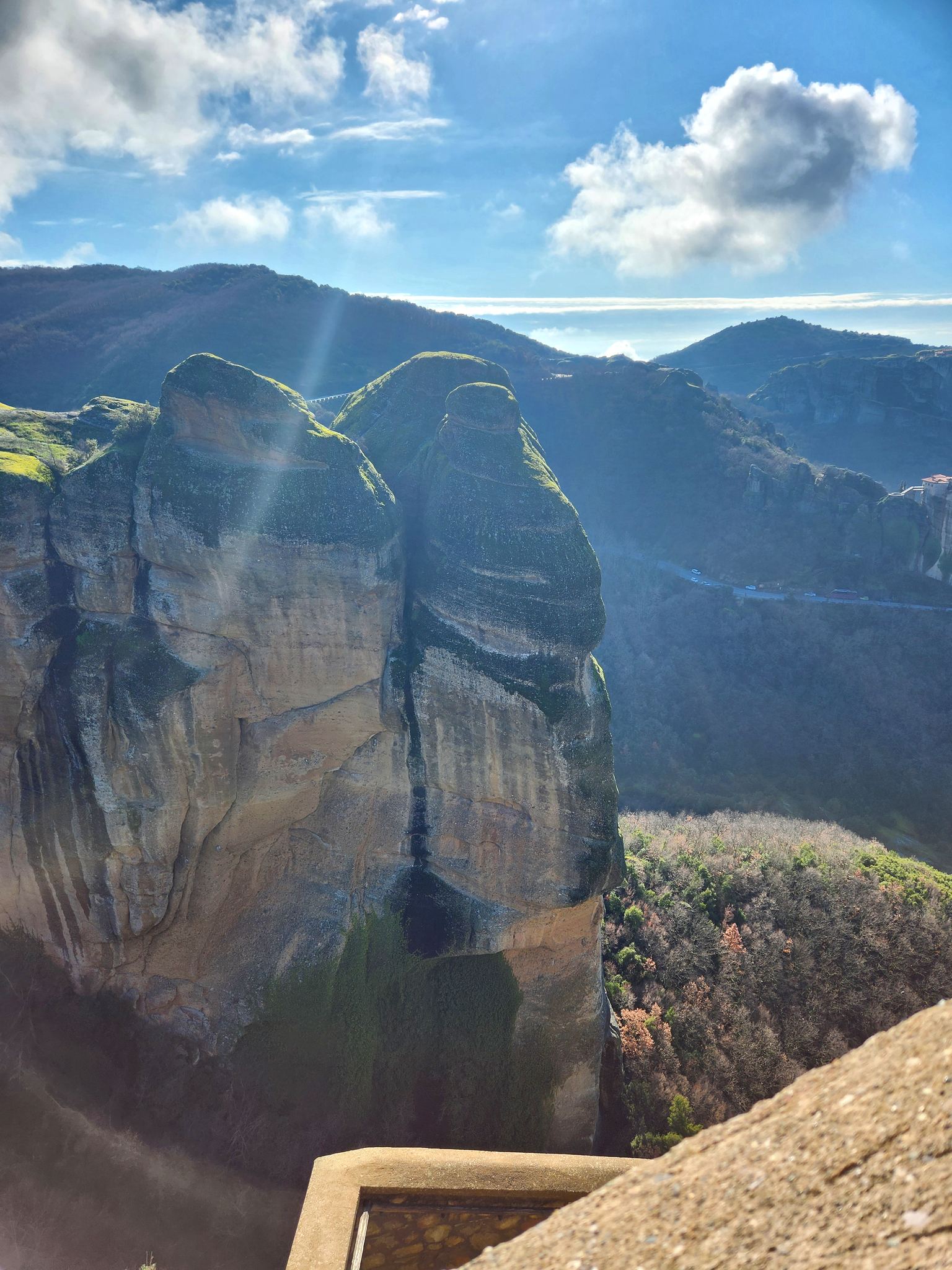
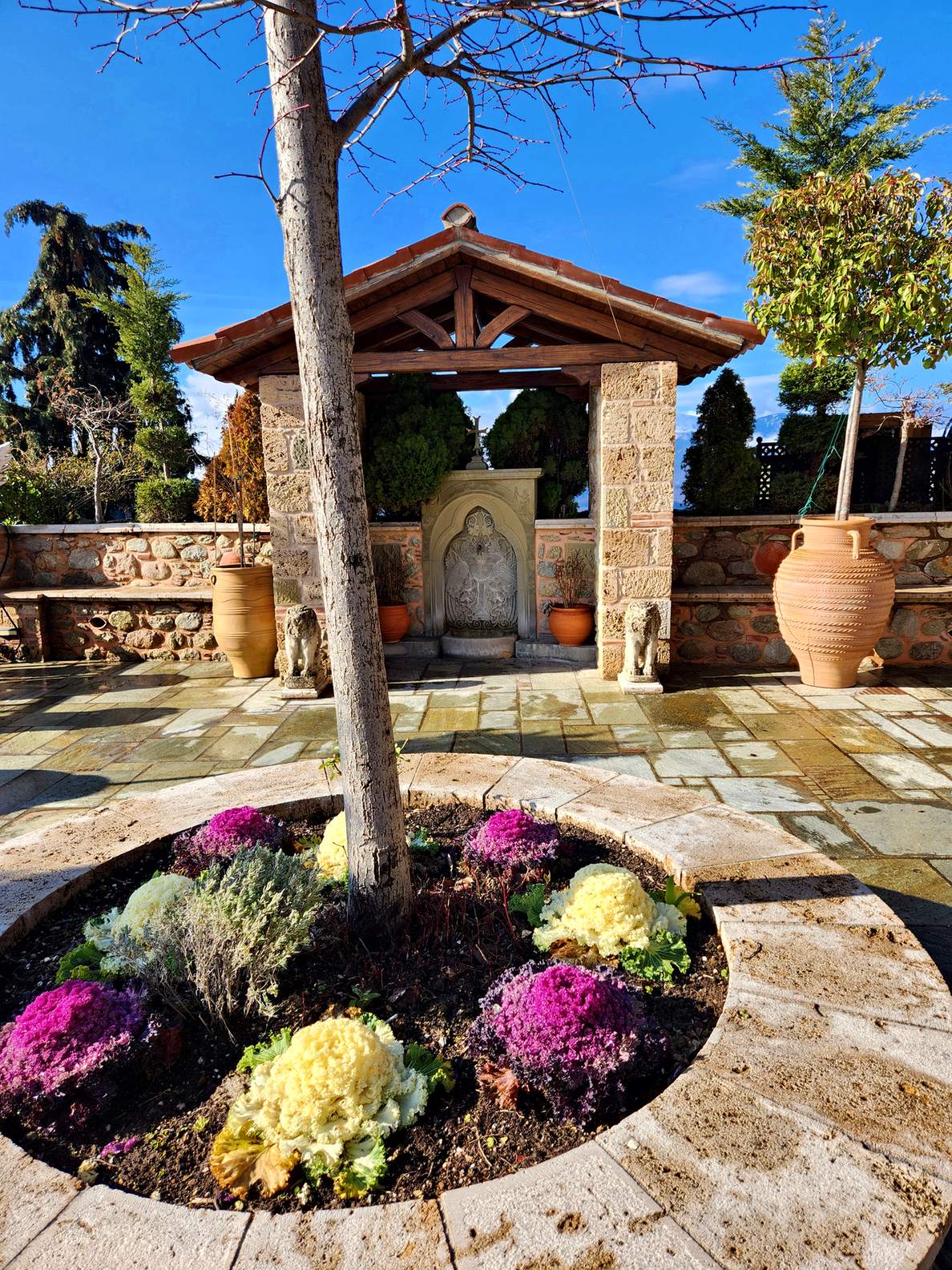
Our first monastery was Varlaam. Up the steps, through the gate, and into a courtyard with flowers in a round stone bed, cypresses against the walls, and the valley falling away behind. From the balcony you look straight down a cliff. Our baby, snug in the carrier, just looked at everything with huge eyes.


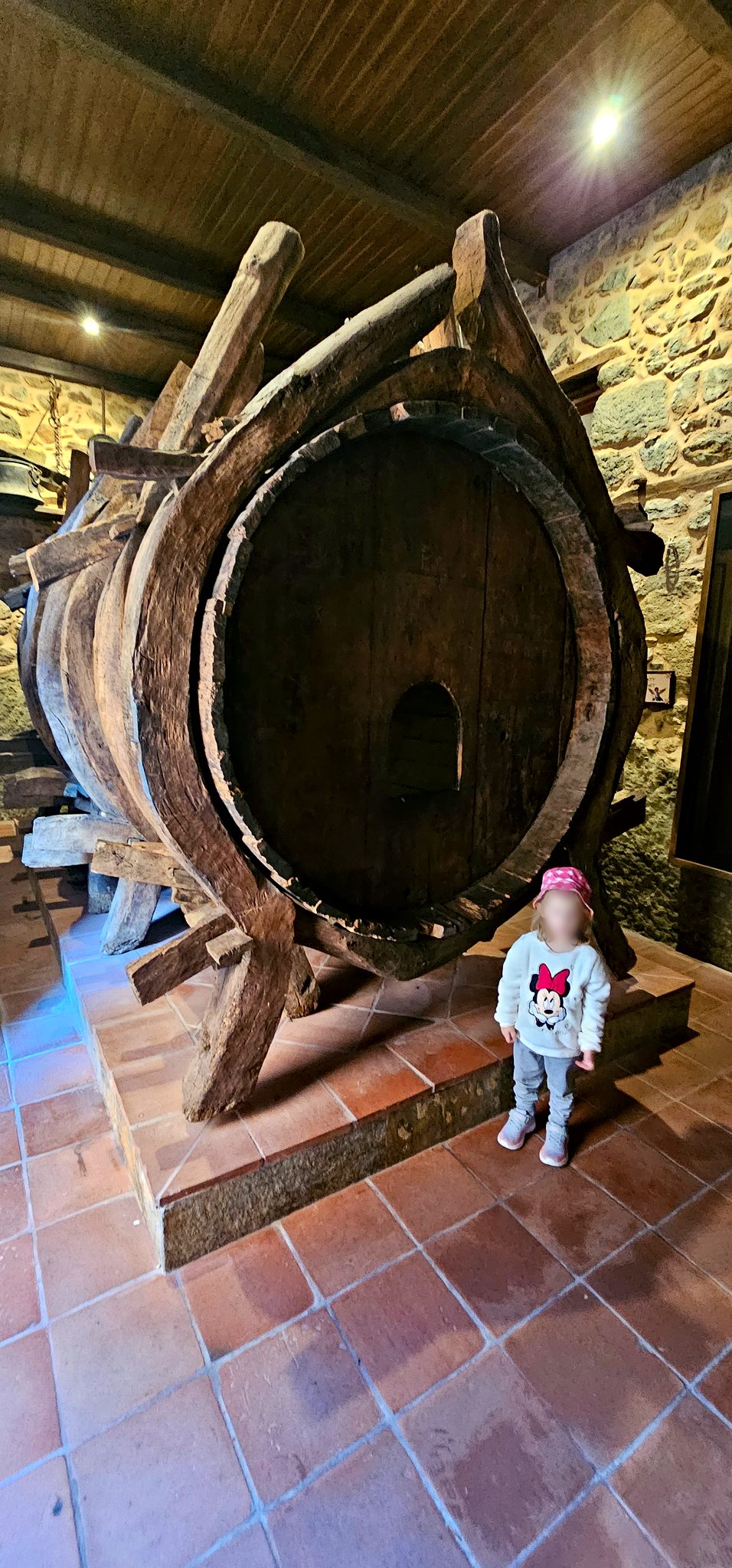
Inside there are icons in gold, a gilded screen that stops you dead in the doorway, and down in the old cellar a wine barrel so big it doesn’t look real. Our toddler stood next to it for a photo and looked about the size of a teacup. Then back out onto the old wooden balcony for one more look at the valley.



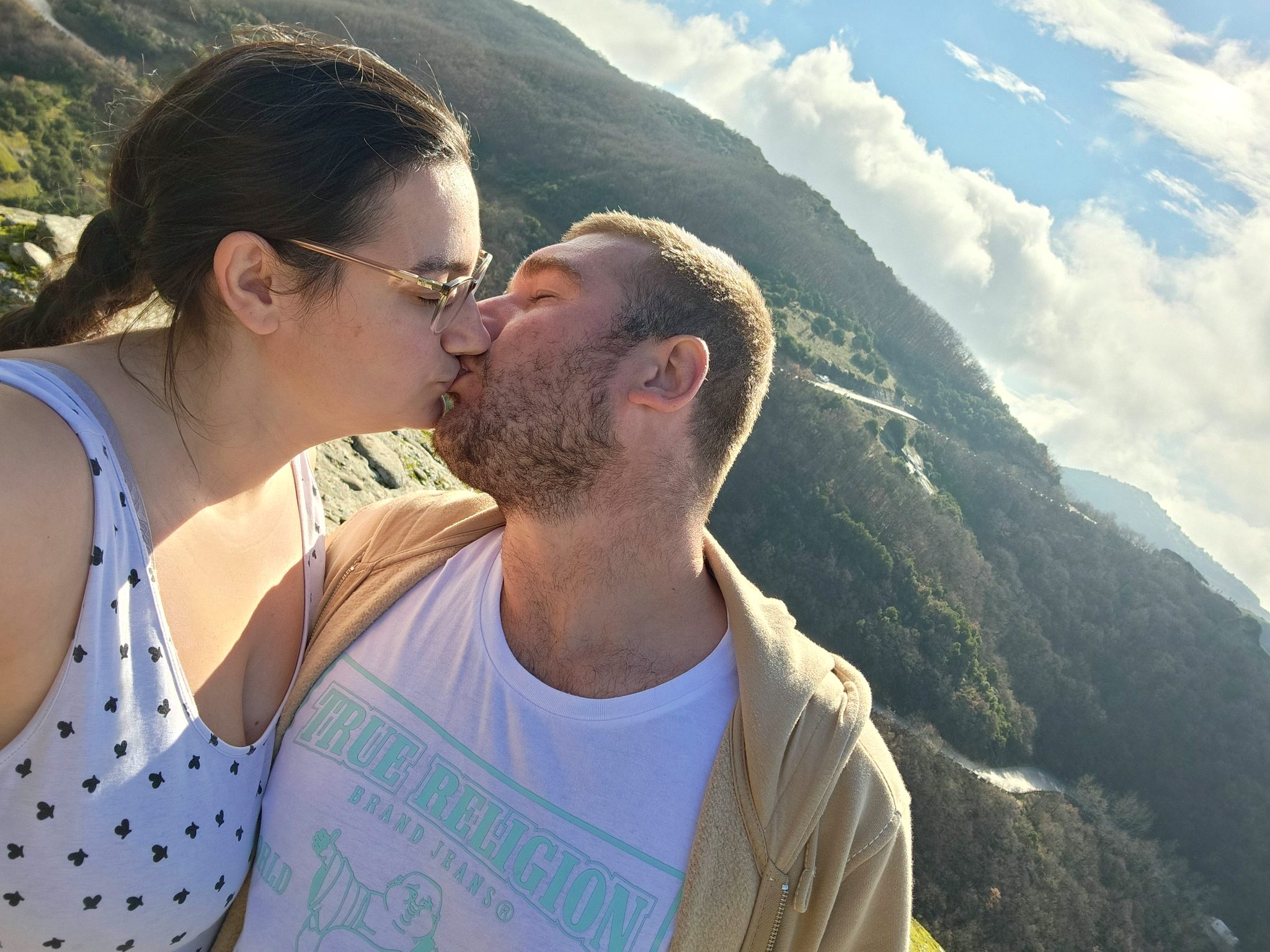
Back outside we took the silliest selfies of the whole trip with the rocks behind us, then walked to another viewpoint for a kiss and a long, quiet look at the valley. The towers just kept going between the monasteries — every turn, another pillar.
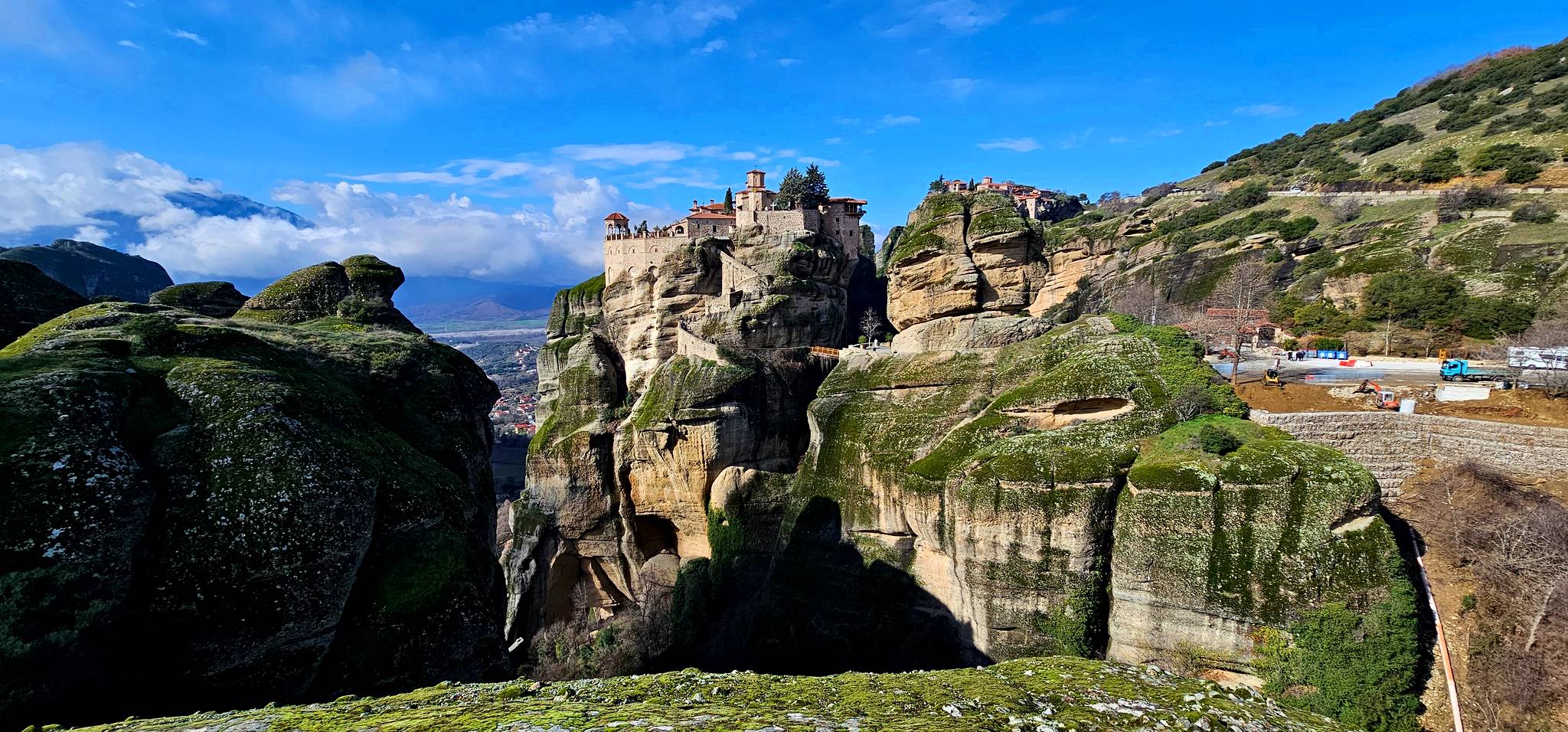
Next was Roussanou — rock towers on the way in, stone stairs climbing up, and then the garden and red roofs below you. You cross a narrow footbridge to the gate, and from the balcony the cliffs drop away on every side.
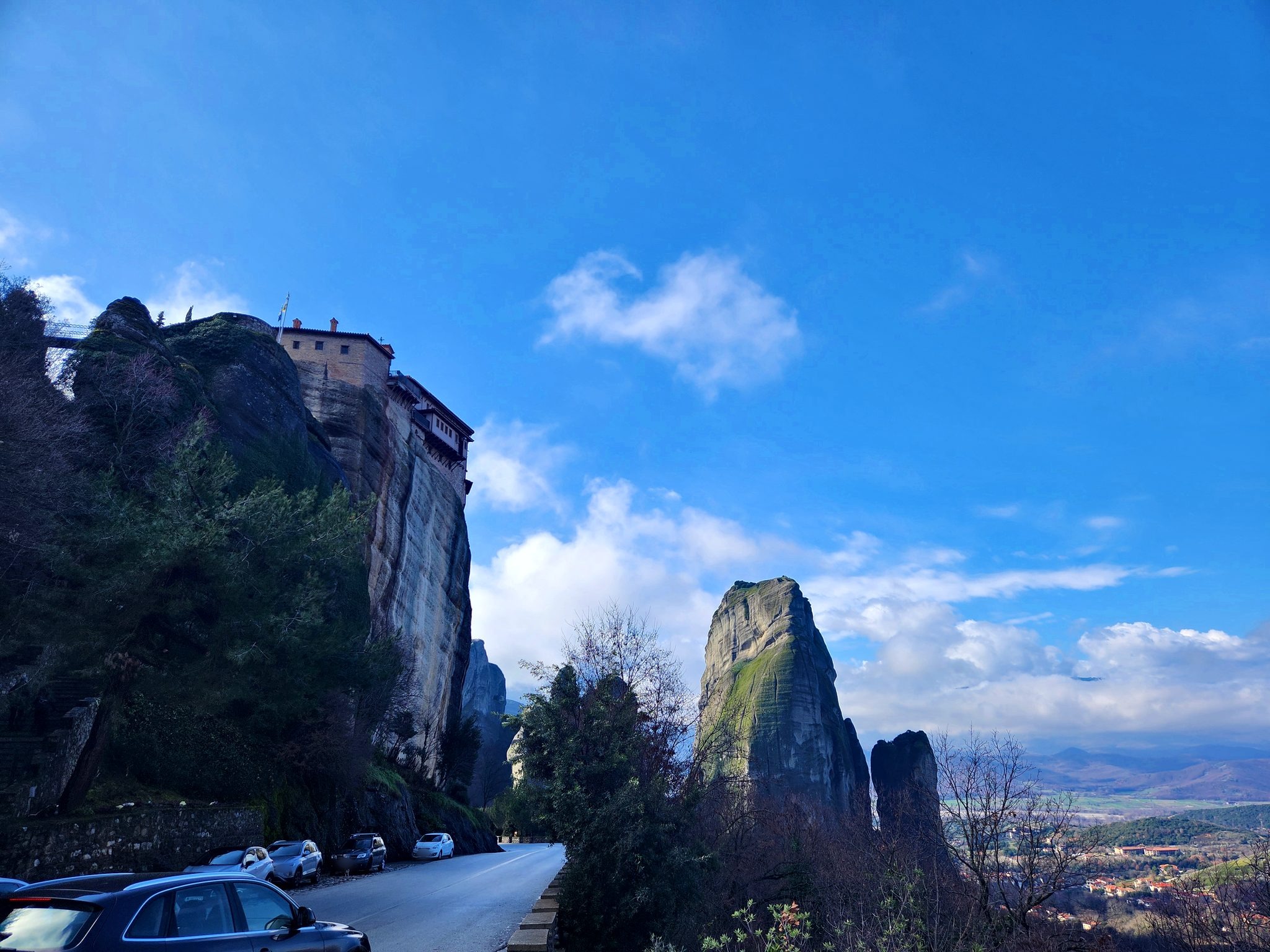
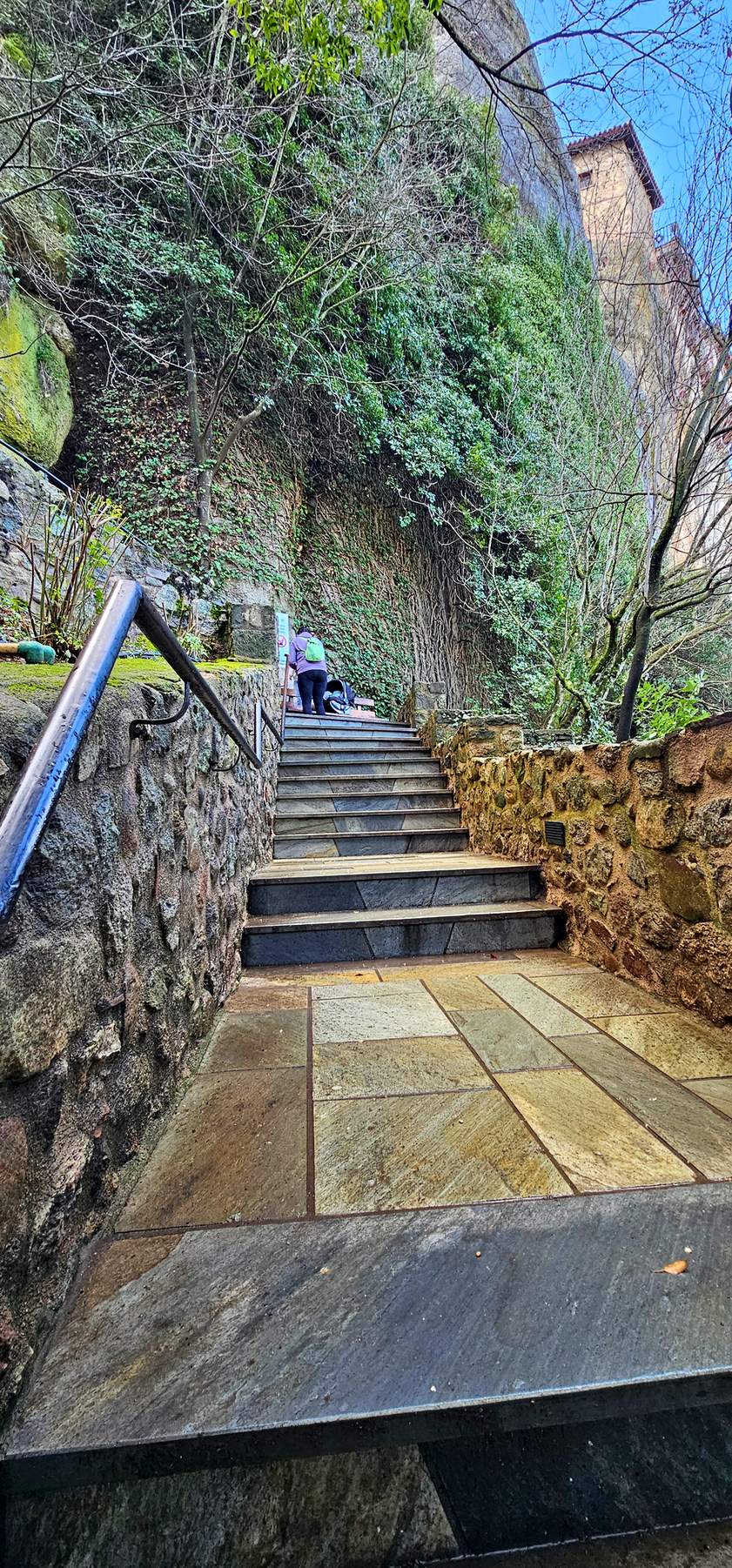

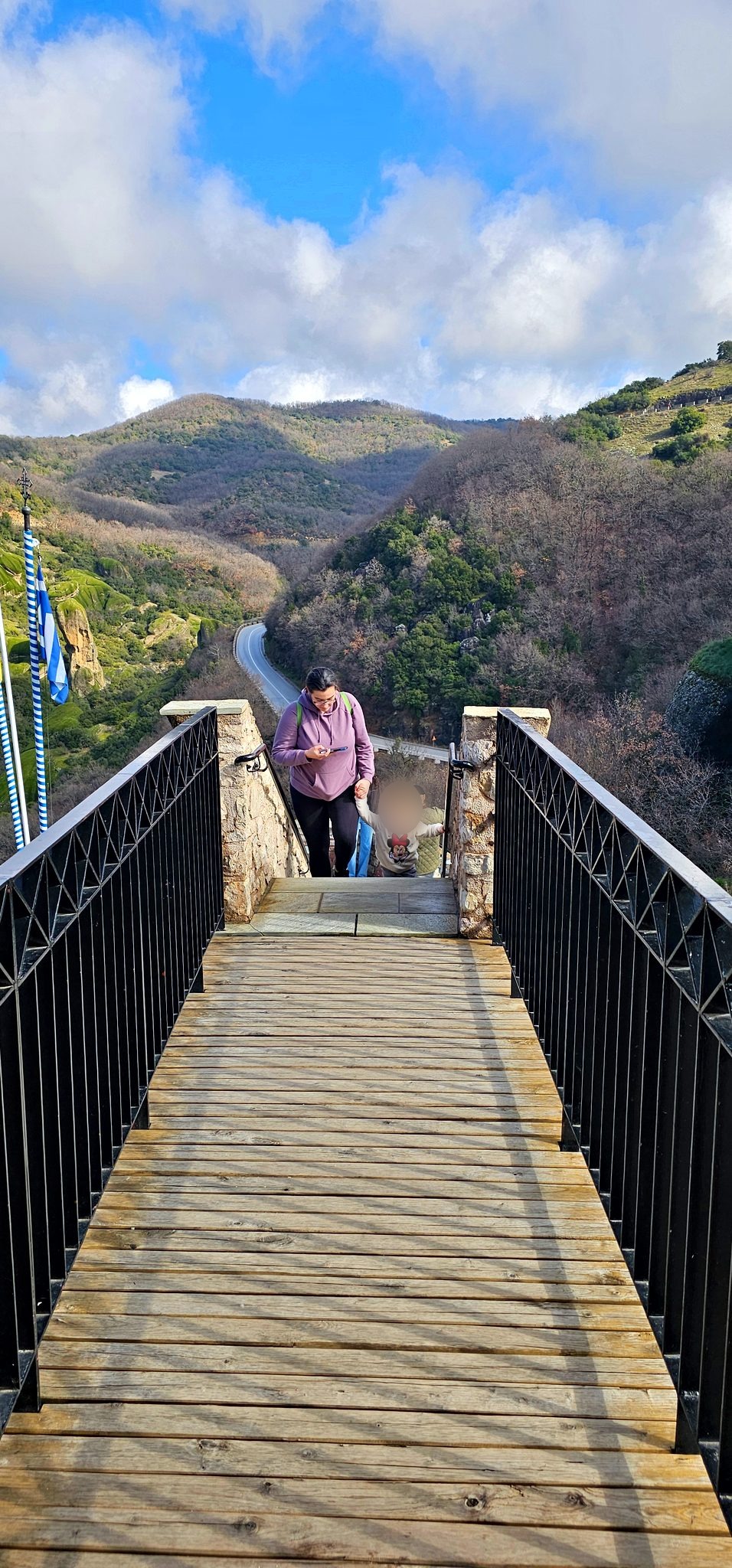

Lunch was down in town, plus a quick stock-up at the Lidl in Kalambaka — clean, well stocked, and handy for Meteora, as our Maps review says. Then we drove ten minutes south to Vasiliki, where there’s a set of swings hanging under a huge old tree. The kids would have stayed there all afternoon. We nearly did.
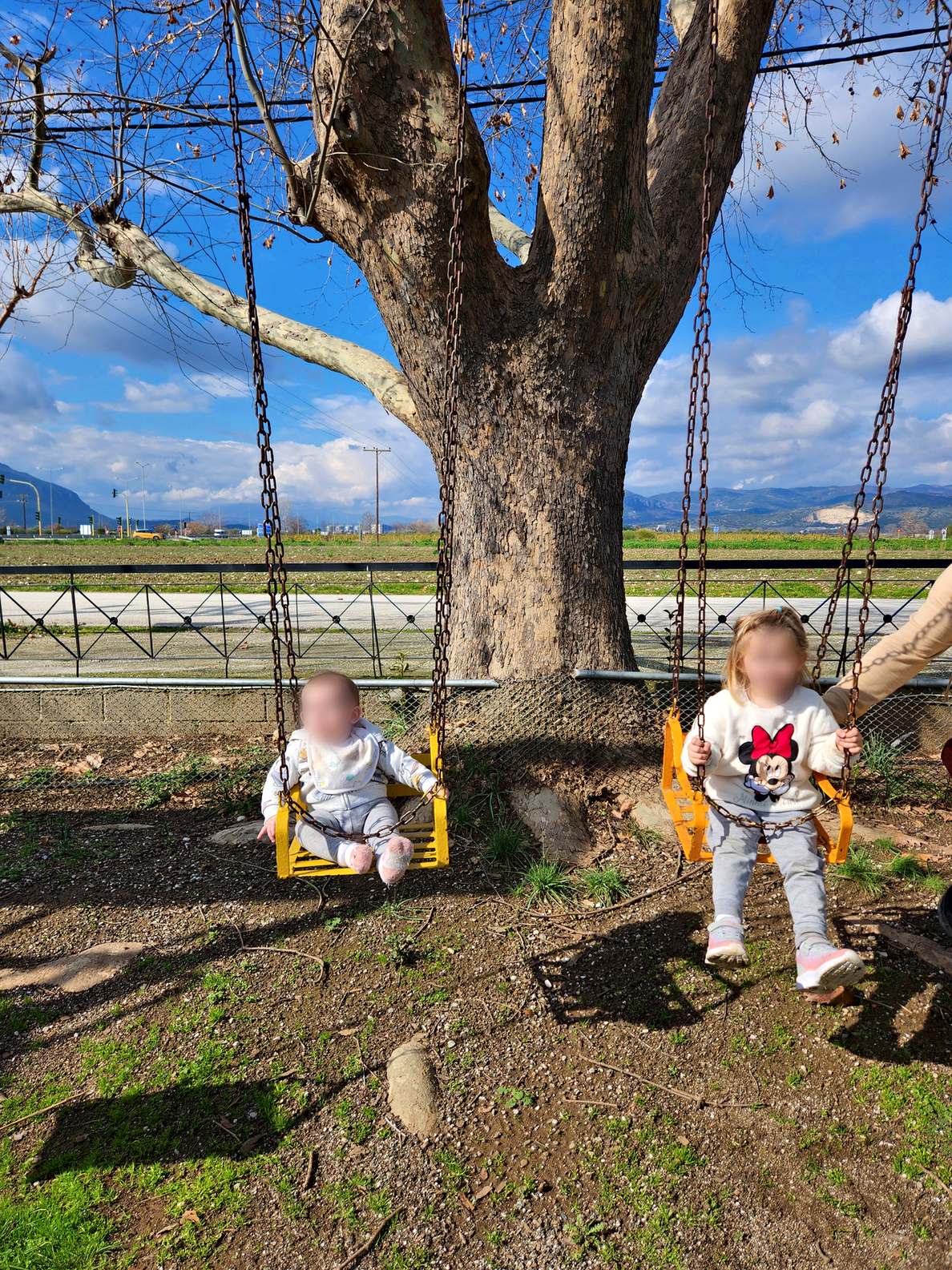
Late afternoon we went back up among the monasteries and parked there for the night. Camper on the rocks, light going gold on the pillars, a video call home in the evening. One of the best places we’ve ever slept.
18 February: waking up inside a cloud
Overnight the blue had gone, and we woke up inside a cloud. The rocks drifted in and out of the mist. Our toddler stood out on a smooth hump of stone in her pink coat, looking at a world that had gone completely white.
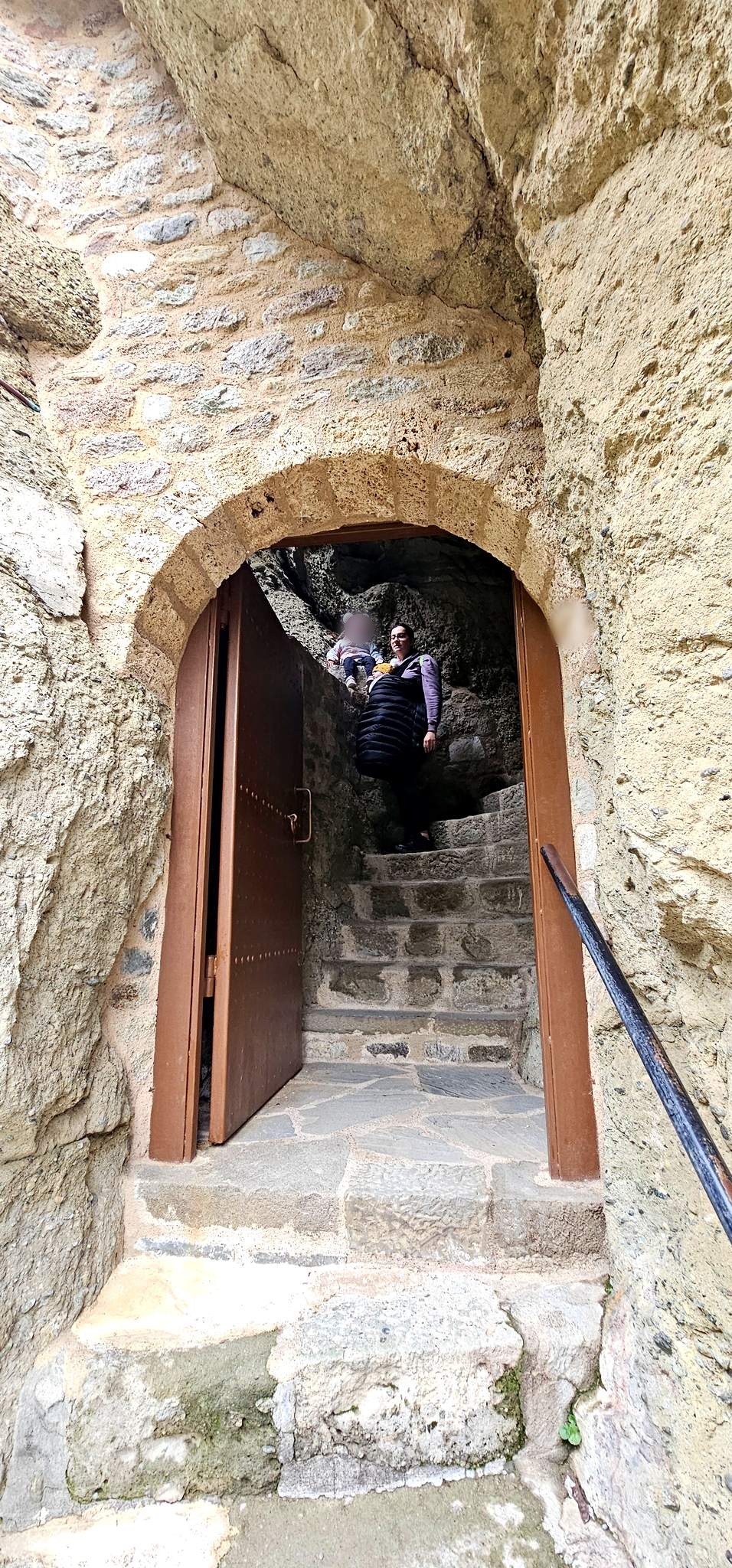
That suited the Holy Trinity Monastery perfectly. You get there through a doorway and a tunnel cut straight into the rock, then up steps and narrow stone passages. In the fog it felt like a secret — terraces fading into white, red roofs and stone walls half-hidden.

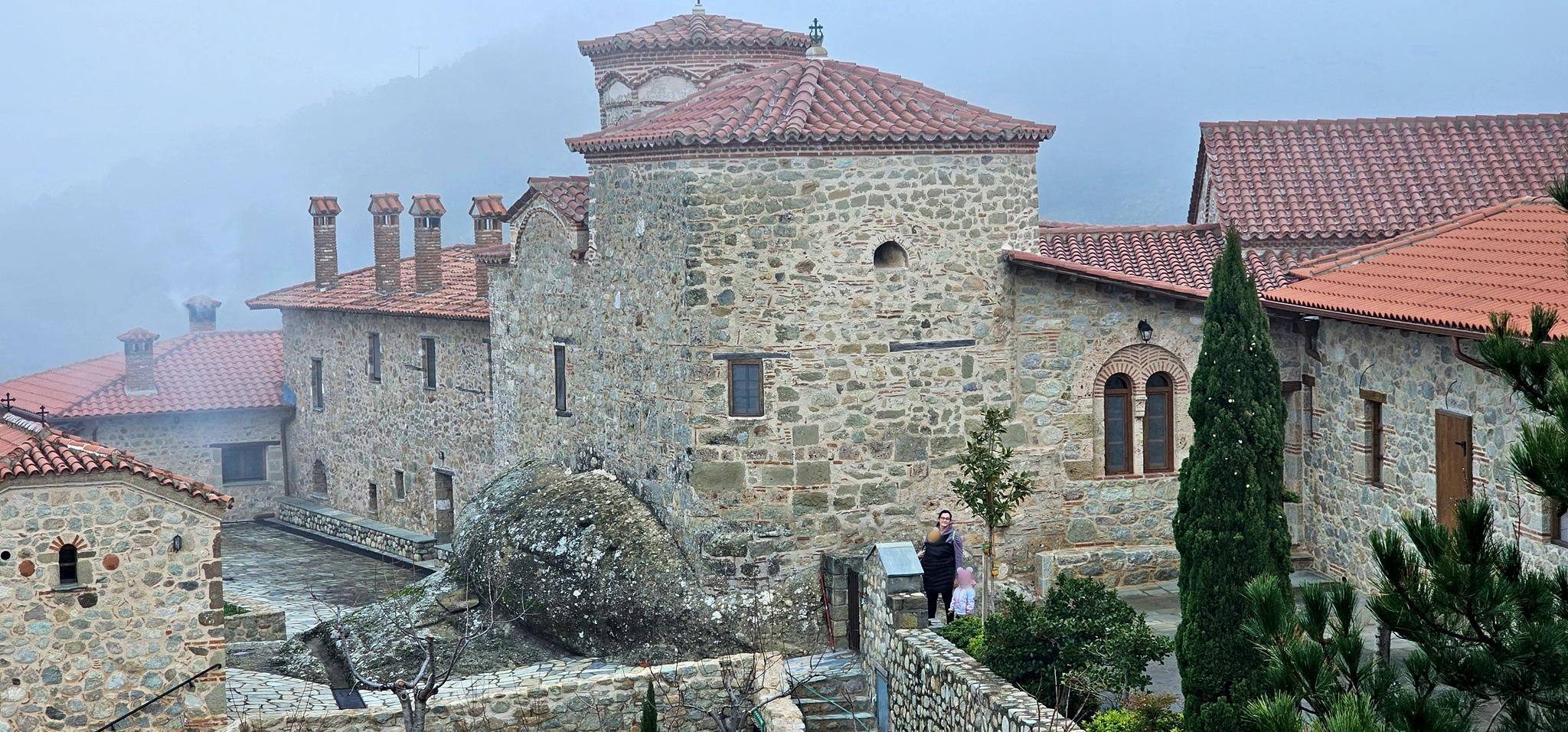
Then on to St Stephen’s, the one you reach over a little bridge from the road — built right into the cliff edge, with a quiet courtyard of stone and wood inside. That whole morning was red roofs in the mist, gravel courtyards, quiet gardens, and the town somewhere far below in the cloud.

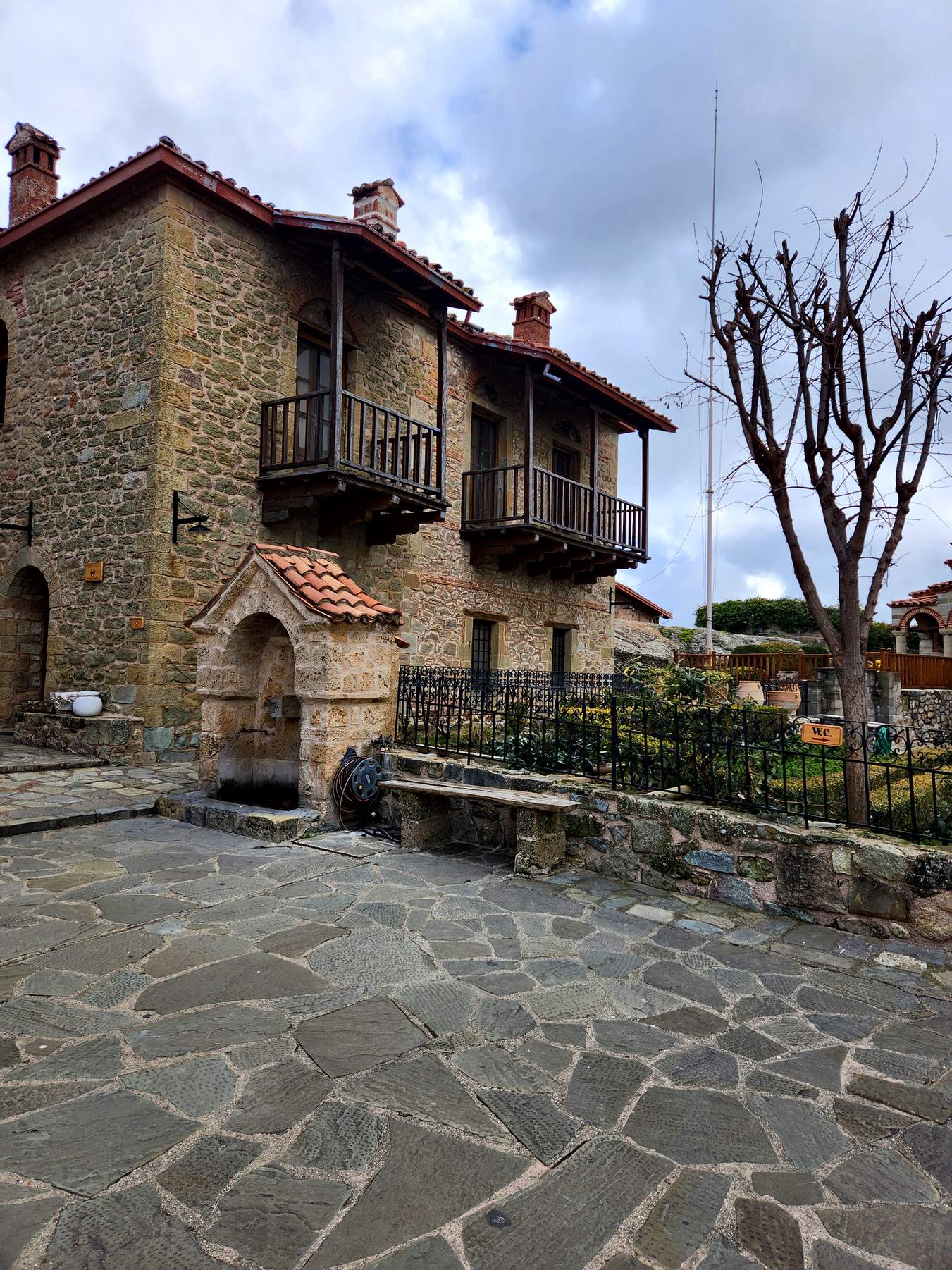
Lunch was in Kastraki, right at the foot of the rocks. In the afternoon the sky cleared again and we went up to St Nicholas Anapafsas, perched on top of its own pillar above the village. From the terrace you look out over rock towers on every side, red tile roofs below, and the wind finally pushing the last of the cloud away.

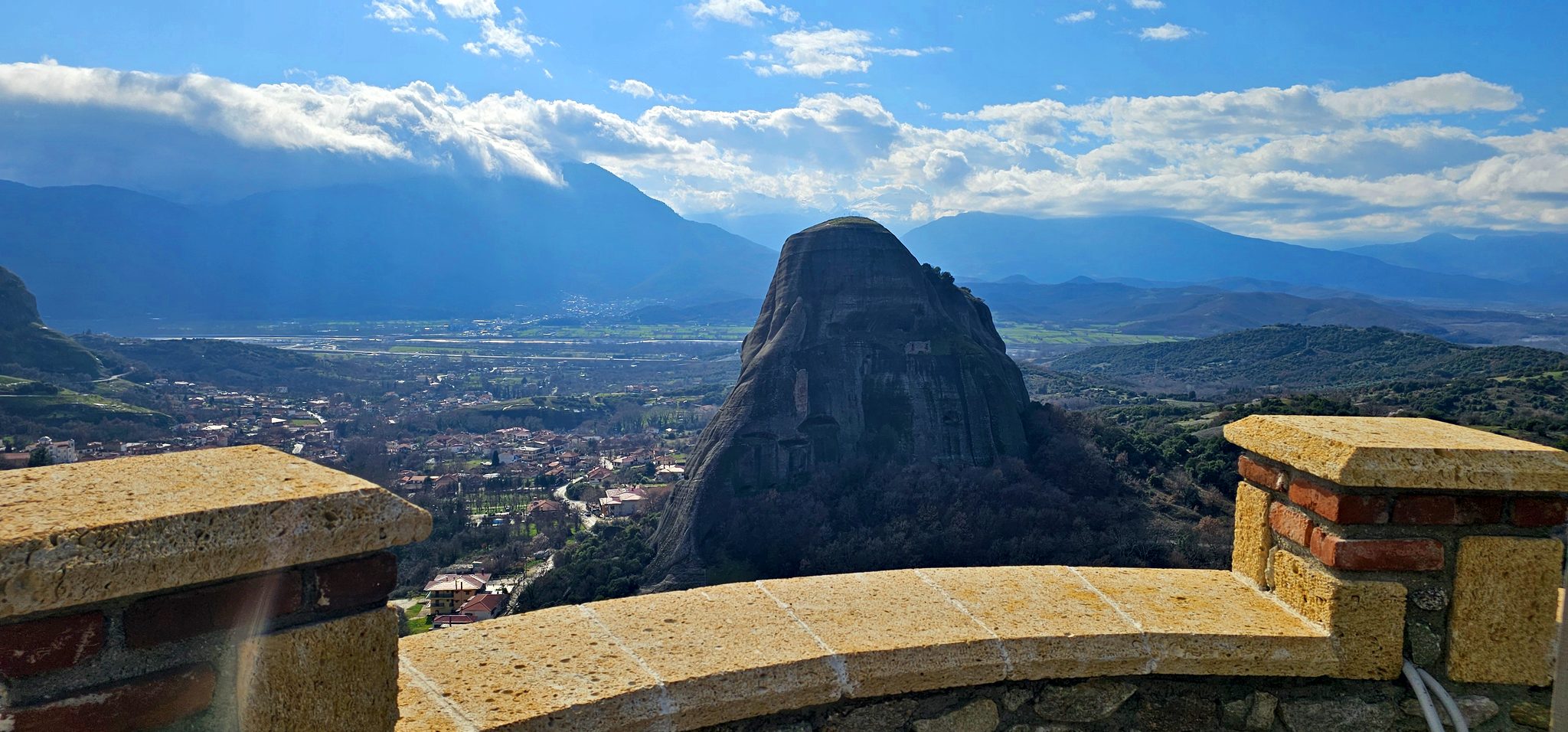

We finished with a slow walk through town and slept back at Arsenis again. Everyone was asleep early.
19 February: heading north
On the morning of the 19th we packed up and drove north toward Macedonia. One last look at the rocks in the mirror, and ahead of us, the steaming waterfalls of Pozar — but that’s the next post (and our Maps review gives it away: five stars doesn’t do it justice).
Three days, five monasteries, one giant barrel, and a night sleeping up in the clouds.